
At another CHIME session, we came to the M: Meaning in life.
One question on the sheet asked, What is the purpose of your life? A few lines down was another one. What makes your everyday life meaningful?
In my notes next to that question, I wrote food, bath, sleep, and shelter.
I could spend a long time trying to answer the first question. But the second brought me back to the day I was actually living.
Where can I make a difference?
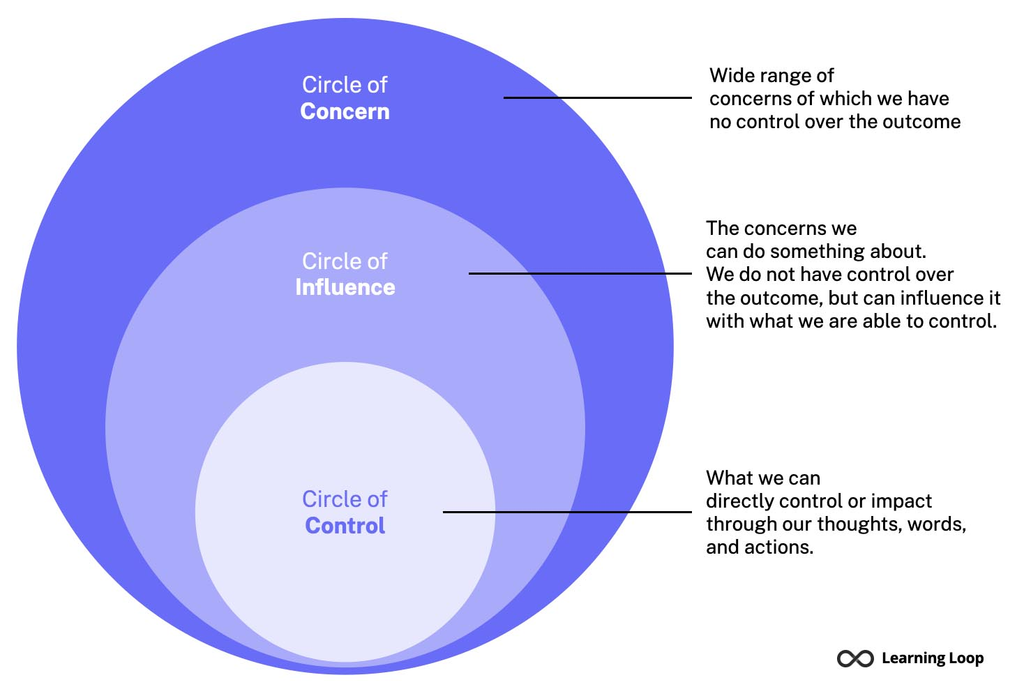
My life is meaningful when I radiate good into the world and that influences the outcome. And I brought up the circles of control, influence, and concern. I wanted to talk about where we can make a meaningful change today, and what we can do when the change we want is bigger than us.
- Control is what I can choose or do myself. I can make a meal, send a message, or decide how I want to respond.
- Influence is where I can have a say or contribute. I can start a conversation, ask for help, or work with other people on something we care about. The outcome is shared.
- Concern is what matters to me and sits beyond what I can change or influence right now.
I can care about something in that outer circle and still ask what’s within reach today. If I’m worried about someone I love, I can call and listen. What happens next may still be uncertain. The call can matter in its own right.
Food, a bath, exercise and sleep
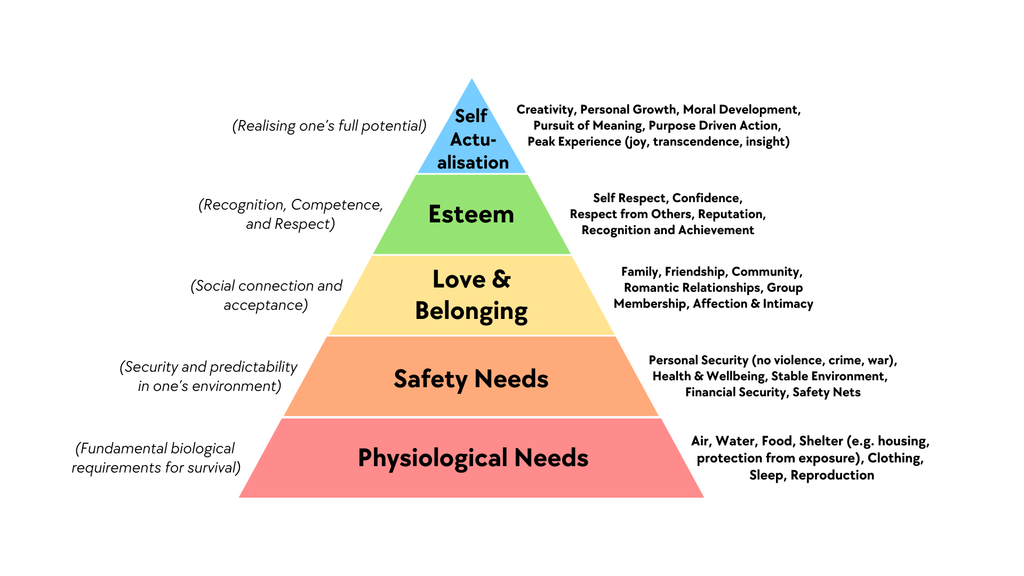
The group also brought up Maslow’s hierarchy of needs, the one often shown as a pyramid. It starts with physical needs like food and sleep, then includes safety, love and belonging, esteem, and self-actualization, which is about developing and using our potential.
Thinking about the pyramid brought me back to those three words in my notes. A meal, a bath, and a good night’s sleep can be ways I take care of myself. A meal can also be time with someone I love. The same ordinary thing can meet a need and give a day meaning.
Why did everything feel meaningless to King Solomon in the bible?
I thought about Ecclesiastes, the book traditionally associated with King Solomon. The speaker describes building houses, planting gardens, and gathering wealth. He enjoys what he does. Then he steps back and asks what lasting good it all brings. One day he’ll leave everything he worked for to someone else, with no say in what they’ll do with it. He describes it as “a chase after wind.”
When I read that he “hated life,” I wondered whether he might have been depressed. I can hear despair in those words. The passage tells me how he describes that moment, but gives me too little to know whether he was going through a depressive episode.
What stayed with me was where he went next. In the same chapter, he talks about eating, drinking, and enjoying the good that comes from our work. He sees these things as gifts from God. I thought about my circles again. So much of what happens next is outside my control. What can I enjoy or care for today?
In the last session on identity, I wrote, You are worthy by design. I’m still learning to believe that. This time, I found myself thinking about how I treat the person those words were meant for. Sometimes giving myself grace looks like eating something, taking a bath, going to bed, exercising, and moving my body.
I also wrote gratitude, pain, and purpose in the same sentence. I can feel all of it in the same day, at the same time. Gratitude is a good one to practice that roots us in life’s meaning. At the same time, I can still grieve the brokenness, be glad someone called, and still hurt when we hang up.
I came away with a few questions I want to keep asking.
- What already makes my everyday life meaningful?
- Who do I find meaning with?
- What do I care about, and what part of it is within my influence?
- What would taking care of myself look like today?